What difference does it make?

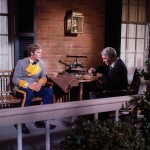
In the 1965 movie Shenandoah there is a scene which resonated with me then and has remained with me these many years. Set during the American Civil War, a widower with six sons and one daughter, Charlie Anderson (Jimmy Stewart) is sitting on his front porch preparing to smoke a cigar when his daughter’s suitor, Lieutenant Sam (Doug McClure) approaches and asks for his daughter’s hand in marriage. Charlie responds by asking “Why? Why do you want to marry her?” When Sam responds “Well, I love her” Charlie tells him “That’s not good enough. Do you like her?” to which Sam starts to say “I just said I…” only to be interrupted by Charlie who tells him “No, no. You just said you loved her. There’s some difference between lovin’ and likin’. When I married Jennie’s mother, I-I didn’t love her – I liked her… I liked her a lot. I liked Martha for at least three years after we were married and then one day it just dawned on me I loved her. I still do… still do.  You see, Sam, when you love a woman without likin’ her, the night can be long and cold, and contempt comes up with the sun.”

More »

what is in your heart

It never fails! You put in an all-nighter, watch the sun come up, and you are so ready to go home and crash and then…the boss walks in and announces a quick breakfast meeting. Then the boss has the nerve to ask you what you think of him, not once, not twice, but THREE times! What’s up with that?

More »

one word is not enough

Have you ever spent some time, a few days perhaps, totally and completely surrounded and immerse in love? Now I will admit that in a sense this is a trick question, for in order to adequately and truthfully answer it one must first understand to what form of love the question is referring.

More »

What will it cost?

During a recent conference the speaker recalled a quote taken from the film The Princess Diaries, “Courage is not the absence of fear but rather the judgement that something is more important than fear; The brave may not live forever but the cautious do not live at all.” He used this quote to explain the cardinal virtue of fortitude. He went further to say that for one to exemplify fortitude one must have a stout heart, a heart that will not be confused by fear.

More »

with a broken moral compass

Martin Luther King once wrote “So I have tried to make it clear that it is wrong to use immoral means to attain moral ends. But now I must affirm that it is wrong, or even more, to use moral means to preserve immoral ends.”[1] What Dr. King was referring to of course were the unjust segregation laws in place throughout much of the United States at the time and especially in most of the states within the southeastern portion of the country. If you haven’t read his letter, written while sitting in a jail cell in Birmingham, Alabama, I would strongly encourage you to do so.

More »

to be perfectly ruled and perfectly free

The question, and concomitant debate and controversy, of whether God exists or as Richard Dawkins and others so adamantly assert is merely a delusion, is unlikely to be resolved to everyone’s satisfaction anytime in the near or far distant future. As someone who resides firmly on the side of God, I must admit to holding certain views that may and often do conflict with those who sit on the opposite side of the proverbial fence. While I quite often may stridently disagree with my worthy opponents on this matter, I hold no animus toward anyone who may happen to disagree with me and I hope and trust that the feeling may be mutual.

More »

who gets to decide what is good or evil?

Who decides? Who gets to decide what is good or evil? On the face of it that sounds like a rather simple question but such questions often belie simple answers. Linguistic logic and clear interpersonal communications notwithstanding, modern cultural propensities generally grant anyone full license to define words in whatever manner they find convenient or desirable. This becomes particularly evident whenever the subject of morality enters the conversation, especially when touching upon such topics as good and evil.

More »

defining that which does not exist

Seldom do we stop to consider the nature and the essence of the absence of a thing for in doing so we must first evaluate and quantify that which is present and thus not absent. This, I am sure, makes perfect sense to absolutely no one at first glance but perhaps an example will help to elucidate.

More »

saints and sinners

There rests a common complaint among many and I must confess throughout much of my life to membership with those so conflicted, that there is no valid rationale for imbibing at the altar of church. After all, isn’t church simply a crutch, a group therapy clinic for the weak and broken? The argument follows along a well-worn arc: church is unnecessary because I pray to God on my own, read and study about God on my own, talk and hear God on my own, anytime and anyplace. So why go to church? Why waste my time?

More »

don’t talk to the false mask

Saint Thomas Aquinas wrote that “to know that God exists in a general and confused way is implanted in human nature, inasmuch as God is man’s beatitude. For man naturally desires happiness, and what is naturally desired by man must be naturally known by him. This, however, is not to know absolutely that God exists; just as to know that someone is approaching is not the same as to know that Peter is approaching even though it is Peter who is approaching. For there are many who imagine that man’s perfect good, which is happiness, consists in riches, and others in pleasures, and others in something else.[1]

More »